

Kangli-Cloud Implant 3D Printing Salon
This page records the Kangli-Cloud Implant 3D Printing Salon and the work of 3D printed orthopaedic implant manufacturer Suzhou Kangli Orthopaedics Instrument Co., Ltd. Held in Suzhou on May 5, 2017, the event combined a tour of Kangli’s production, testing and 3D printing centres with presentations on customized implant design and medical-engineering collaboration.
Event date: May 5, 2017
Page date: 2017-05-06
What should a buyer look for in a 3D printed orthopaedic implant manufacturer?
The salon shows two areas to examine: the manufacturing route from production through testing and 3D printing, and the R&D discussion around customized implants. It also records how Kangli brought university and hospital experts into conversations about design, biomechanics and medical-engineering collaboration.
Welcome and facility tour in Suzhou
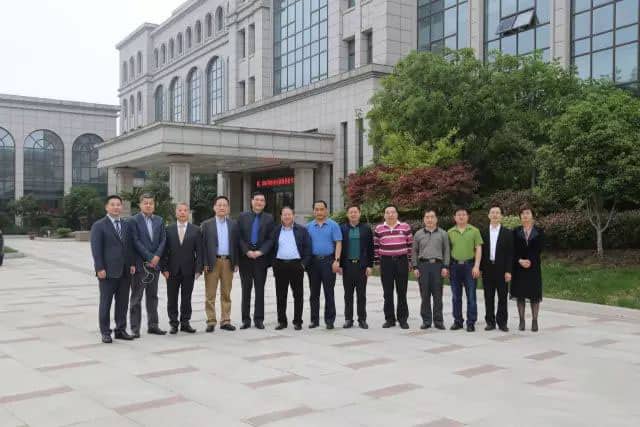
At the Suzhou facility, Chen Yongbing, Chairman of Kangli, Chen Jiakang, General Manager, directors Lu Jun and Shi Yonghu, and other senior management welcomed the invited guests and took group photographs.
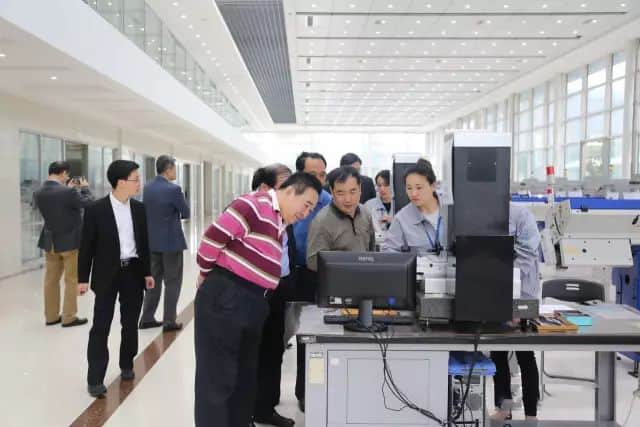
Director Lu Jun then led the visitors through Kangli’s production centre, testing centre and 3D printing centre. At the production centre, attendees viewed industrial equipment and a computer workstation as part of the facility tour.
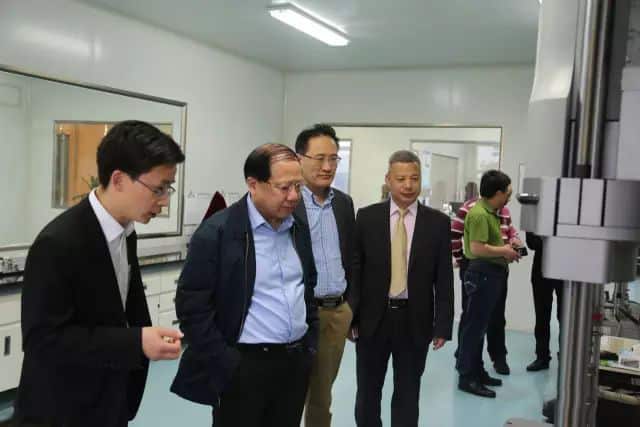
The testing-centre visit brought the group into a white-panelled room with observation windows and large industrial equipment.
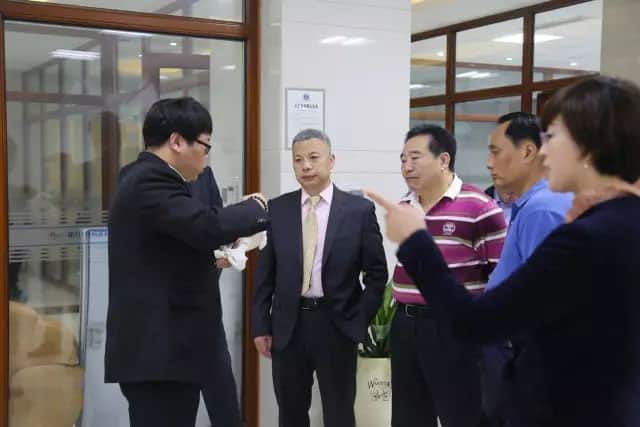
The 3D printing centre was another stop on the itinerary. The group visit below shows participants continuing through an indoor facility area beside glazed rooms and interior windows.
Conference programme: 3D printing and implant design
After the facility tour, the conference salon turned to Kangli’s development history, planning and research priorities. Chen Jiakang also introduced the Kangli Cloud Implant 3D Printing Center, including the reasons for its establishment and its strategic goals.
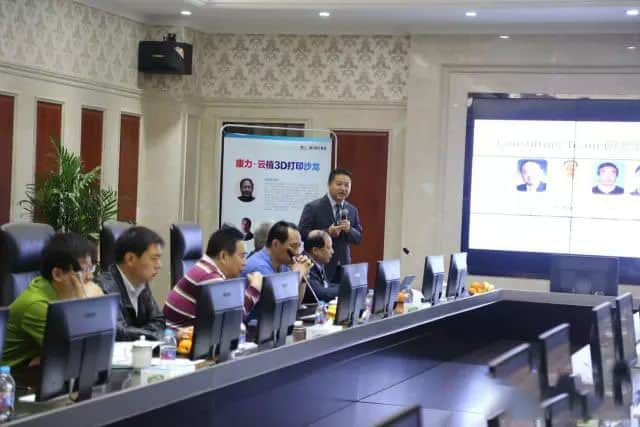
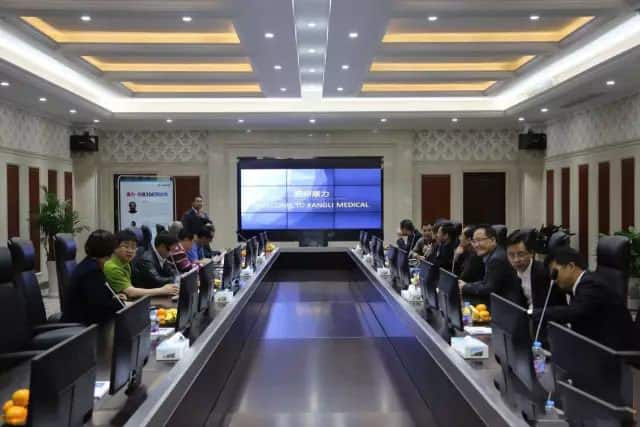
The wider conference programme brought participants together around presentation screens and meeting tables for further technical discussion.
Customized acetabular implant design
Professor Zhou Jiansheng from the First Affiliated Hospital of Bengbu Medical College presented design experience involving customized 3D-printed DDH acetabular implants. The discussion covered design methodologies, implant shapes, fault tolerance and collaboration between medical and engineering teams.
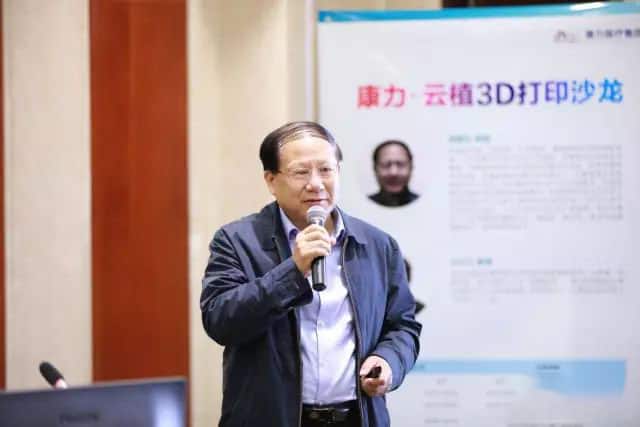
Orthopaedic biomechanics and 3D-printing analysis
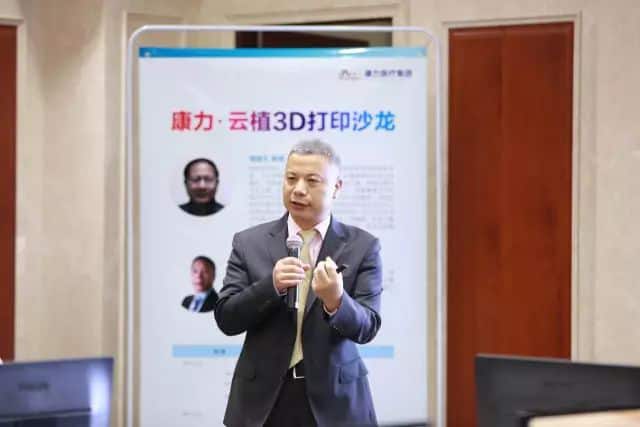
Professor Wang Changjiang from the University of Sussex in the United Kingdom presented on orthopaedic biomechanics and 3D-printing analysis. Topics raised for discussion included intraoperative image processing, error control, the connection between artificial joint components and bone, bone-implant integration and the future scope of personalized customization.
Artificial-joint and surgical-guide prototyping
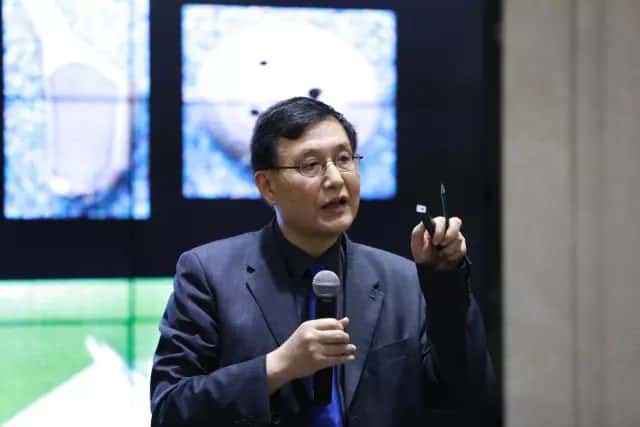
Professor Hua Jia from the University of London presented work on designing and prototyping artificial joints and surgical guides with 3D printing. He also discussed research capabilities, experimental design and follow-up as part of new product development for medical device manufacturers.
Artificial vertebral bodies and joint-replacement research
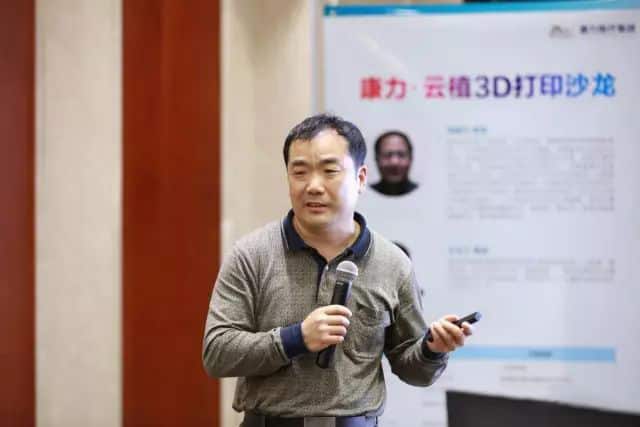
Professor Dong Xieping from Jiangxi Provincial People’s Hospital presented reports on 3D-printed artificial vertebral bodies and a comprehensive approach to minimally invasive total hip arthroplasty. He described work carried out with Kangli to design and manufacture artificial vertebral bodies using 3D printing, and outlined a product-development model led by clinical physicians with medical-engineering backgrounds.
His second report proposed a broader view of minimally invasive joint-replacement research, including attention to implant design and the development of surgical instruments.
Discussion among the participating experts
Professor Dong Xieping’s presentations led to another round of discussion. Professors Hua Jia, Wang Changjiang, Xu Zhonghe from Guangzhou First People’s Hospital and Guo Kaijin from the Second Affiliated Hospital of Xuzhou Medical University offered their opinions and suggestions. Kangli’s leaders, executives and R&D technical personnel, together with representatives of Suzhou Yunzhi, also took part in the salon.
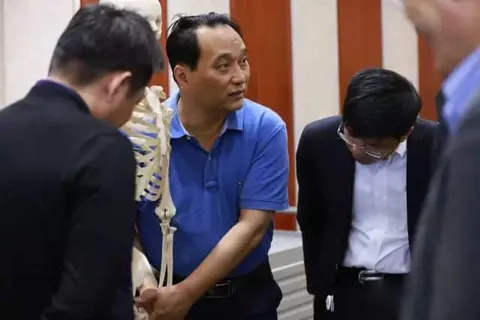
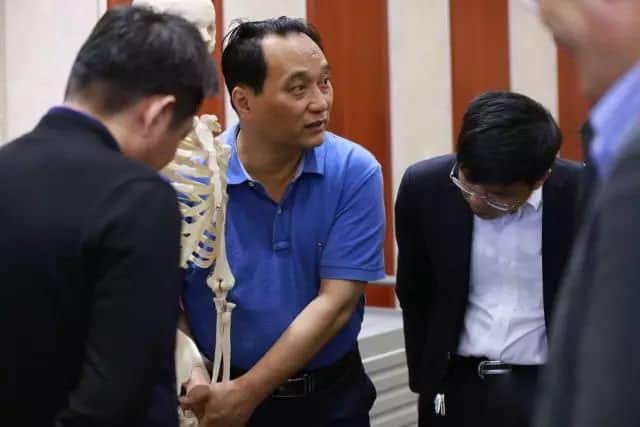
The exchange continued with attendees examining a small handheld object together, reflecting the salon’s discussion-led format.

3D printing, machining and OEM scope for buyers
Kangli Orthopaedics manufactures orthopaedic implants and surgical instruments and offers OEM, ODM and OBM services. Its clinical fields served include trauma, spine, joints, craniomaxillofacial fixation, foot and ankle, thoracic applications involving the sternum and rib, and paediatric orthopaedics.
Product families include:
- Spine fixation: anterior and posterior cervical systems, anterior and posterior thoracolumbar systems, and intervertebral fusion cages
- Trauma: locking plates, intramedullary nails, cannulated screws, bone plates and titanium cables
- Craniomaxillofacial fixation: CMF fixation systems and customized digital 3D titanium nets
- Foot and ankle: calcaneus and tibia products, micro locking and variable-angle locking plates, pins and screws
- Thoracic and general products: sternum and rib systems, screws and accessories
Founded in 2002, Kangli has around 200 employees, a campus of about 50 acres, roughly 40,000 square metres of floor area and registered capital about 102 million CNY.
Its manufacturing setup includes CNC machining with DMG 5-axis centres, Citizen Cincom Swiss-type automatic lathes, a DMG CTX beta 1250 TC turn-mill centre and Haas machining centres. An on-site vacuum heat-treatment furnace supports stress relief and annealing.
Kangli also collaborates with universities on R&D, 3D printing and personalised implants. Its stated work includes 3D-printed bone models from patient imaging and customised titanium nets produced from CT, MRI and DSA data. Quality systems held include ISO 13485, FDA, CE and GMP.
For distribution planning, Kangli sells to about 25 provincial regions of China and supplies directly to 35 countries. Its products reach more than 40 countries when onward resale is counted.
Request a quote for orthopaedic OEM manufacturing
Distributors, hospital suppliers and brands seeking OEM, ODM or OBM support for orthopaedic implants and surgical instruments can request a quote from Kangli Orthopaedics. Share your product family, design requirements and sourcing brief to start a manufacturing discussion.