

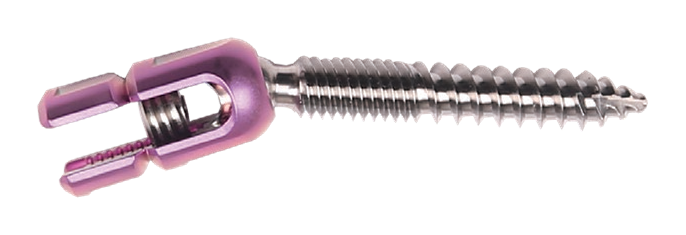
Low-profile Spinal (Polyaxial) Pedicle Screw
- Spinal Implants & Fixation
- Pedicle Screws
- Double-Thread
- Polyaxial
- Rotating
- Break-off
- Short Tail
- Low-profile
Specification
- Material
- Titanium Alloy
- Diameter
- 4 - 7.5 mm
- Length
- 25 - 50 mm
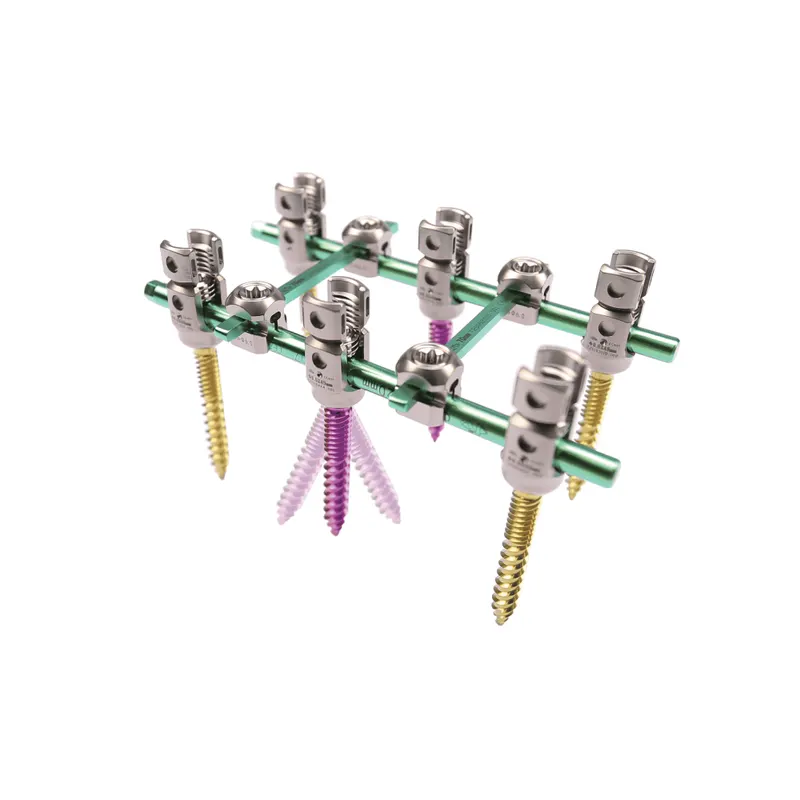
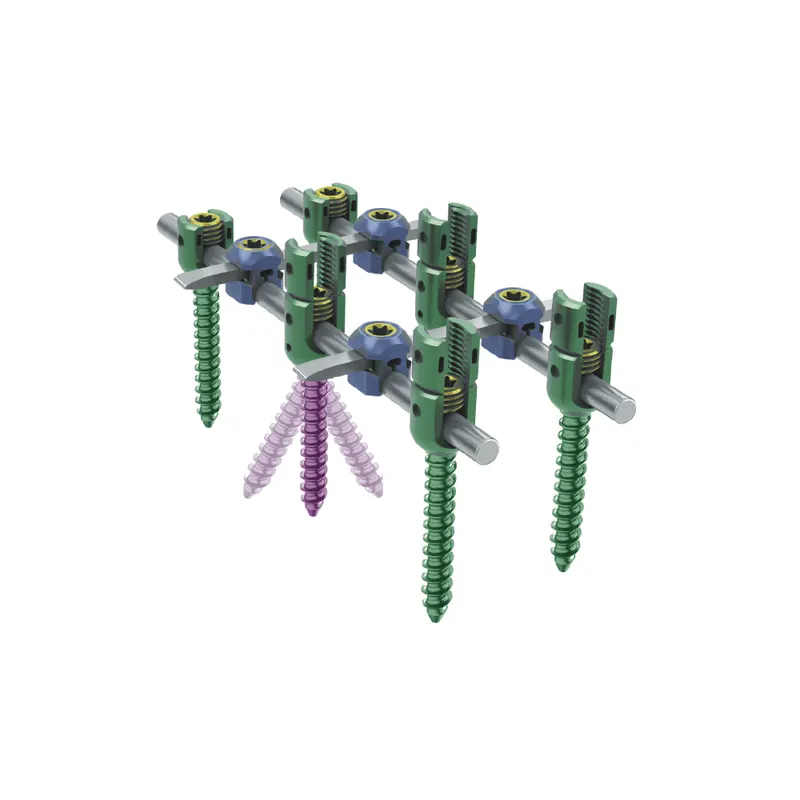
Kangli Orthopaedics produces this low-profile spinal polyaxial pedicle screw with a U-shaped receiving head and threaded shaft for pedicle-based spinal fixation. The titanium alloy implant is available with a double-thread shaft, short-tail head options, a break-off design, and either multiaxial or rotating movement. These configurations provide a compact head profile and allow the receiving head to be positioned relative to the screw shaft during construct assembly.
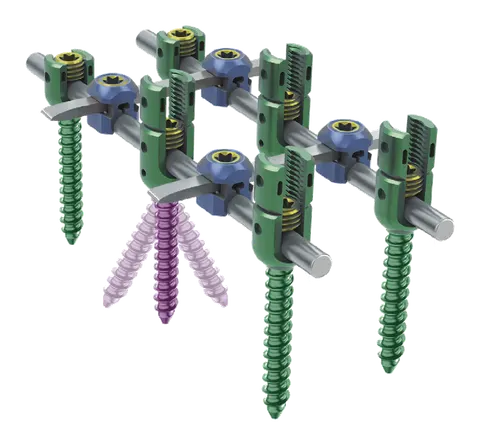
Trapezoidal Thread Form at the Screw Head
The upper section of the screw uses a trapezoidal thread profile. A trapezoidal flank transmits the tightening load along a face that is closer to square with the screw axis than a V-form, so less of that load is turned into outward pressure on the head walls. The result is a joint that holds its clamp with less splay in the receiving head, and that resists the screw working back out of the assembly.
Torx Drive and Bayonet Instrument Coupling
The nut is driven through a Torx recess. The multiple lobes of a Torx pattern engage the driver on flanks that sit near-perpendicular to the direction of turn, so torque transfers without the camming action that lets a driver rise out of its seat and round the recess. Instrument coupling uses a bayonet fitting with a stretch hatch: the driver is seated and turned to lock rather than threaded on, and the screw stays captive on the driver on the way to the pedicle instead of being carried loose.
Double-Thread Shaft for Cancellous Purchase
The shaft features two threaded zones: a finer proximal section and a coarser section toward the pointed tip. This stepped thread arrangement provides separate advancing sections along the shaft and maintains threaded engagement along the prepared pedicle path. The coarse distal thread is cut for cancellous bone, the structure the screw travels through in the vertebral body, giving each turn a deeper bite into low-density bone. The core diameter grows toward the head, so the section of shaft carrying the highest bending moment — the one at the pedicle entry, closest to the construct — is also the thickest section of the screw.
Low-Profile Short-Tail Head Options
The U Multiaxial Pedicle Screw and U Rotating Pedicle Screw are available in short-tail versions. Their upper sections terminate closer to the main head body than longer-tail configurations, reducing the amount of head length extending above the fixation connection.
Break-Off Head Configuration
Break-off versions incorporate a designated separation point in the upper screw assembly. Once the screw has been seated, the excess break-off section can be removed, leaving the specified head profile rather than the complete insertion extension. Removal is a break at a prepared line, so no separate trimming step is required to arrive at the final head height.
Polyaxial and Rotating Head Movement
The multiaxial head can change its angle relative to the screw shaft. The rotating version turns around the shaft axis during construct assembly. These movement options allow the screw trajectory and final receiving-head orientation to be managed separately.
Spinal Fixation Configuration Options
This low-profile pedicle screw is suited to configurations involving:
- pedicle-based posterior spinal fixation
- screw placement where head height is a key design consideration
- multiaxial or rotating head alignment within a fixation construct
- break-off screw assembly after seating in the pedicle
- purchase in cancellous bone within the vertebral body
This product differs from the Minimally Invasive Spinal (Polyaxial) Pedicle Screw, which is selected when a minimally invasive configuration is the primary requirement.
Insights & resources
- 10:37
 Video
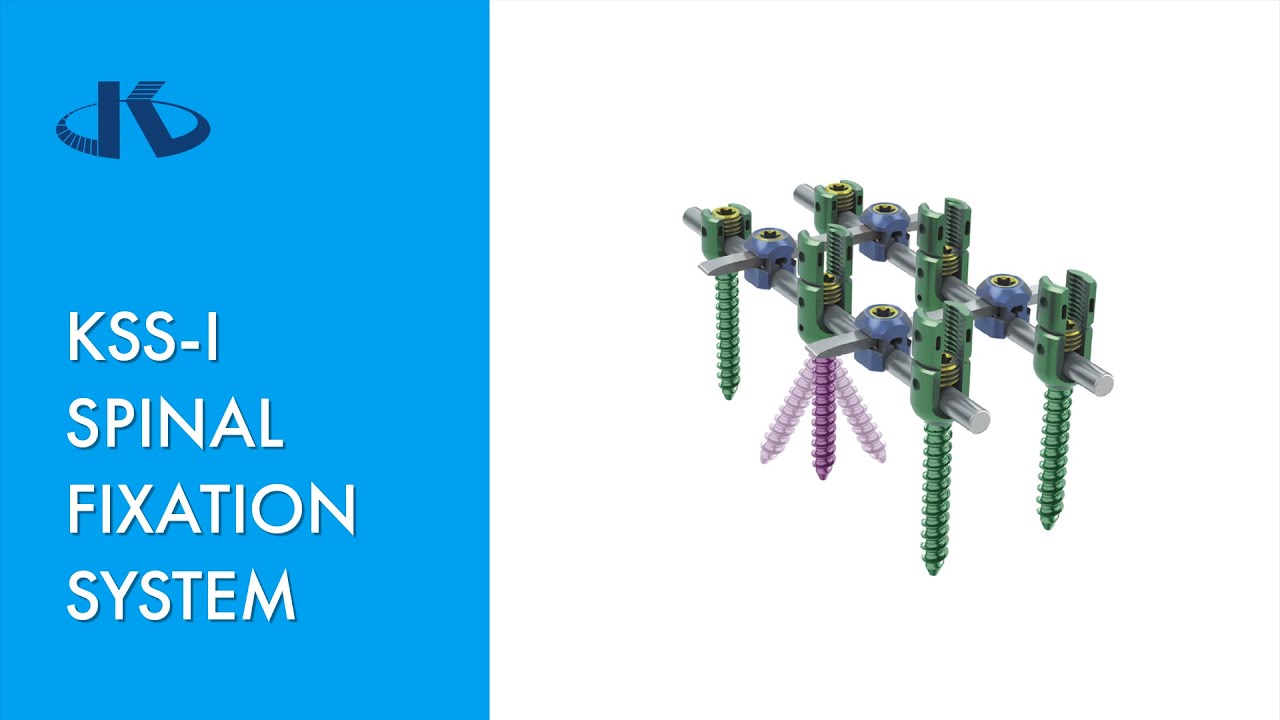
VideoKSS-I System Video
- 94 PAGES
 Brochure · Implant
Kangli Implants Catalog
- 5 PAGES
 Brochure · Instrument
JZPA Instrument Set
- 2:09
 Video
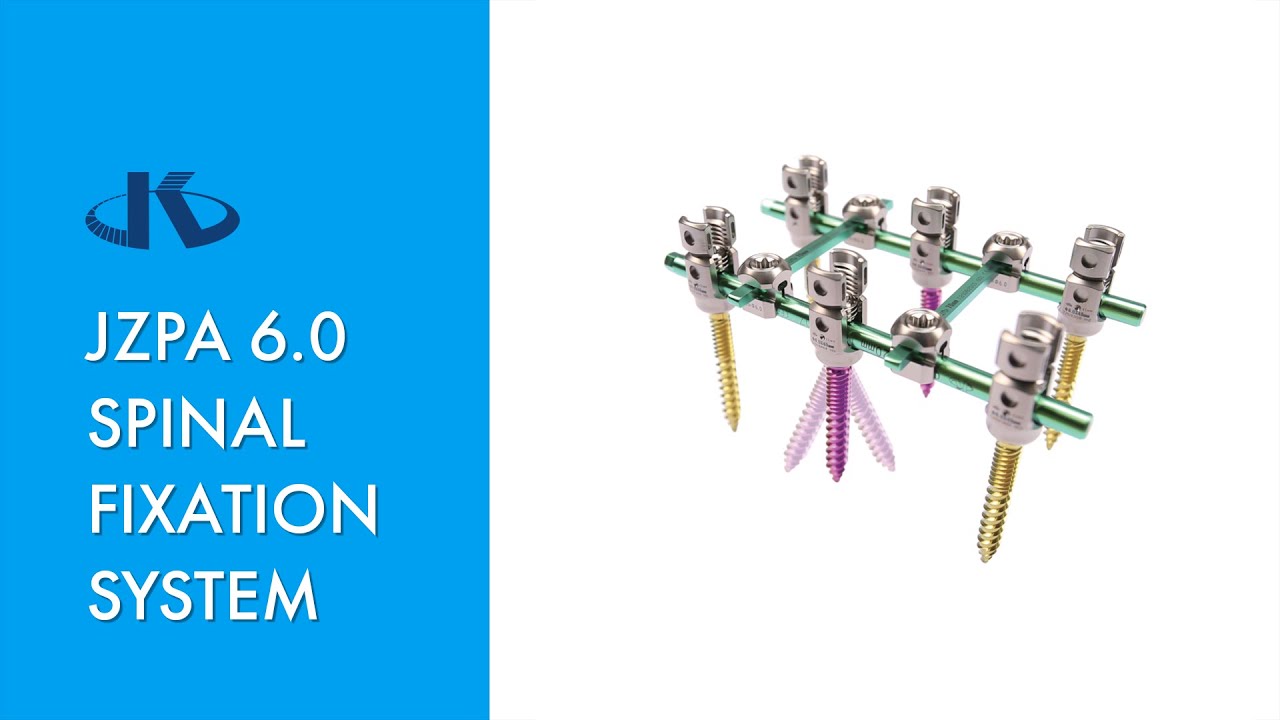
VideoJZPA 6.0 System Video
- 3 PAGES
 Brochure · Implant
KSS-II 5.5 Spinal Fixation System
- 4 PAGES
 Brochure · Instrument
KSS-II Instrument Set
- 3 PAGESBrochure · Implant
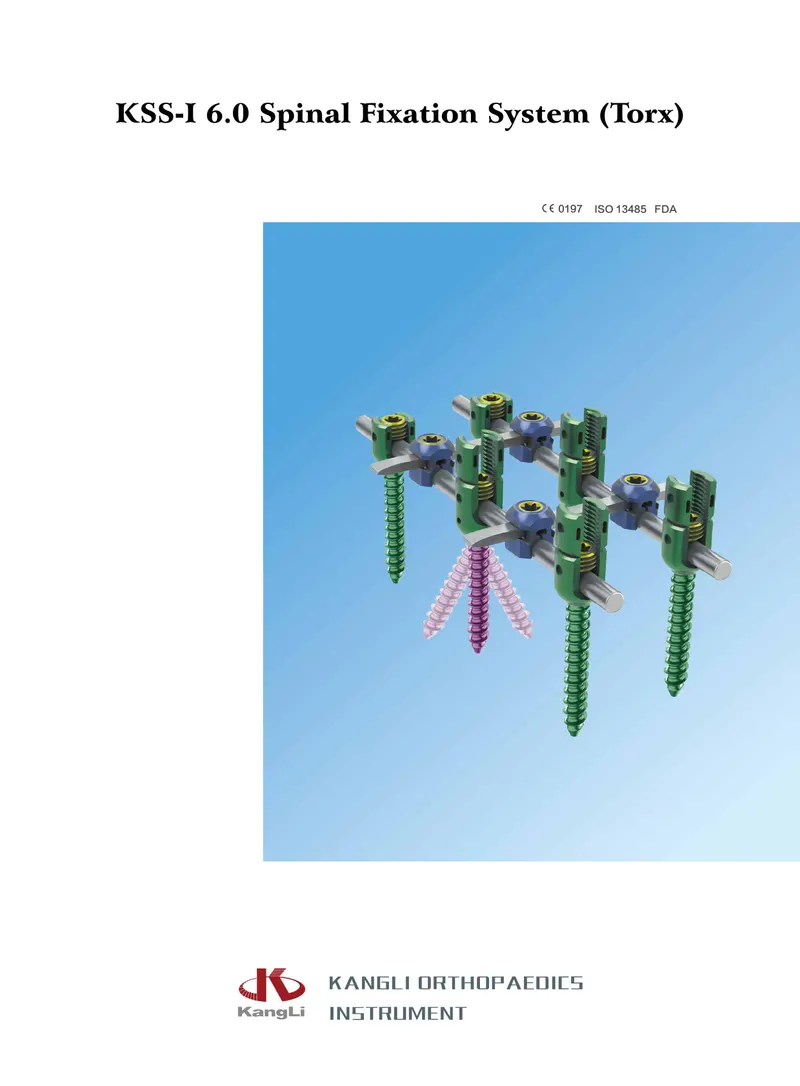
KSS-I 6.0 Spinal Fixation System
- 6 PAGESBrochure · Instrument
DTL Instrument Set