
Rib Claw Plate
Specification
- Packaging Form
- Clean Packaging, Sterile Packaging
- Material
- Pure Titanium
- Diameter
- 11 - 19 mm
- Length
- 49 mm, 34 mm, 59 mm
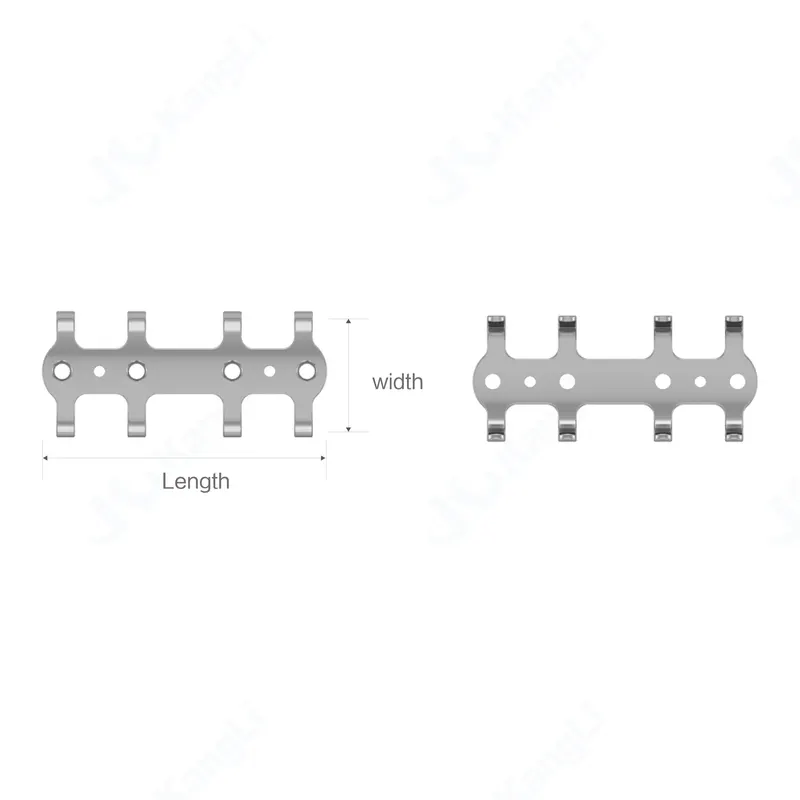
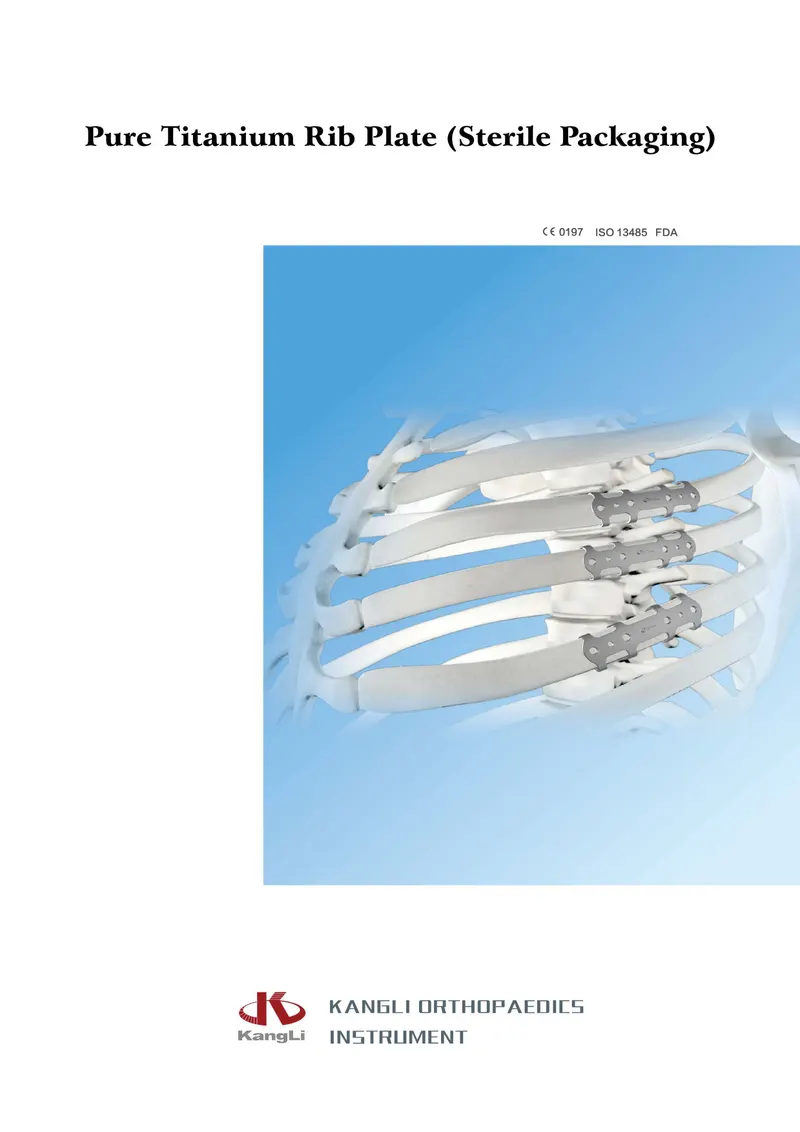
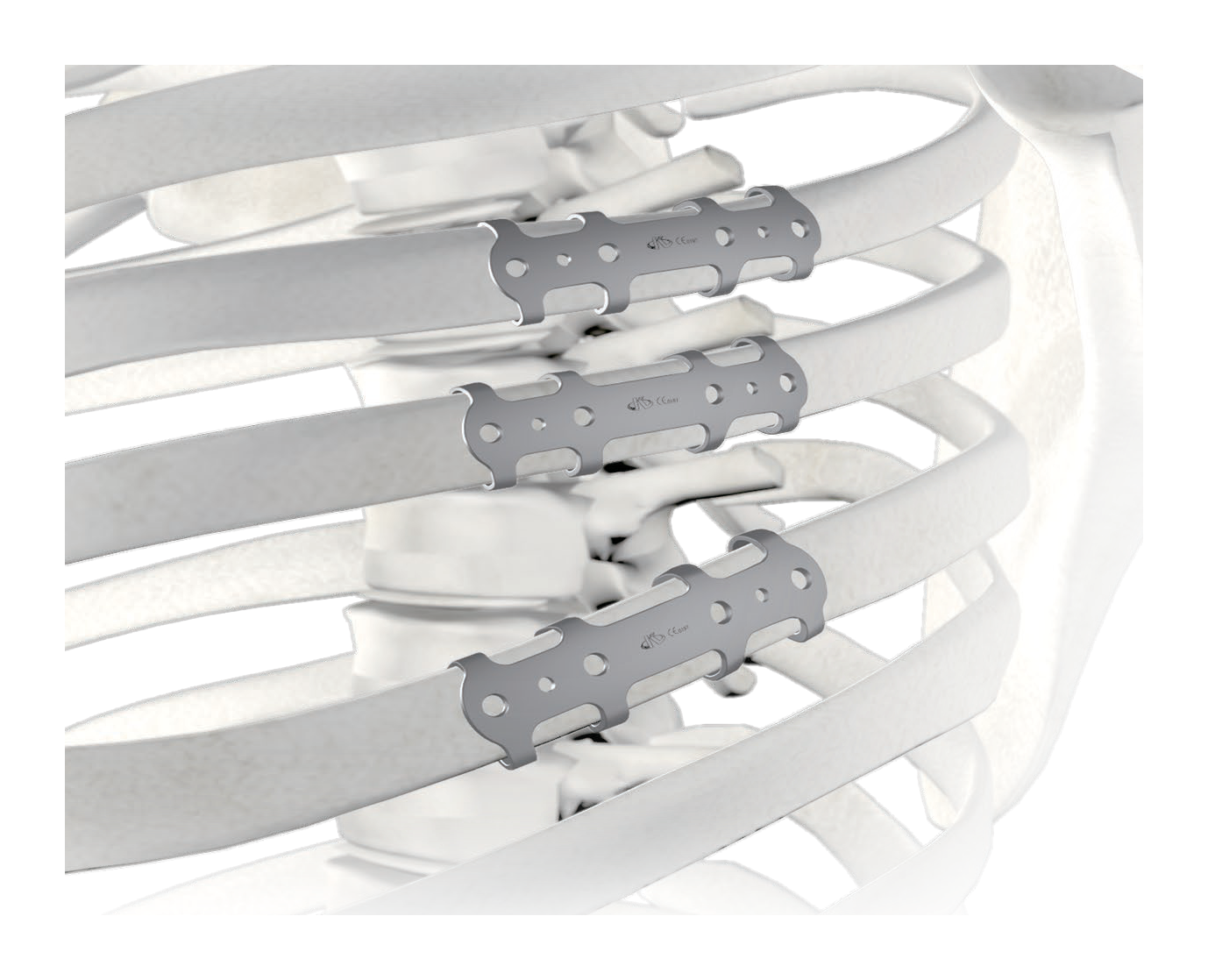
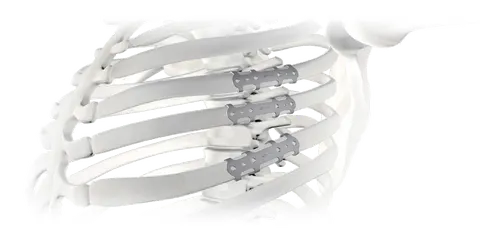
Kangli Orthopaedics manufactures this pure titanium rib claw plate for rib and chest wall fixation. Its low-profile body combines a gentle longitudinal curve, a widened perforated centre and claw-like extensions that wrap around the rib margins. Staggered openings provide fixation positions across the central section. The plate is available in clean packaging or sterile packaging for integration into the rib fixation product range.
Contoured Geometry for Rib Fixation
The plate features a gentle longitudinal curve and widened central section designed around the changing contour of the rib. This geometry provides an alternative to a flat plate profile when a contoured implant is required for the chest wall.
Claw Extensions Around the Rib Margins
Tapered extensions project from both ends of the perforated centre and are shaped to pass around the upper and lower rib edges. This wraparound configuration provides fixation surfaces along the rib margins in addition to the central plate area.
Staggered Openings Across the Central Section
The widened centre includes repeated oval or circular openings arranged in staggered rows. The layout distributes the available fixation positions across the central section while the narrowed ends retain the plate’s contoured outline.
Low-Profile Plate for Thoracic Anatomy
A slim plate body, rounded transitions and tapered terminal extensions create a compact profile for rib and chest wall applications. The design avoids a bulky squared shape at the plate ends and maintains a close-fitting outline around the rib contour.
Rib and Chest Wall Fixation Applications
- Rib fracture fixation
- Chest wall fixation
- Thoracic fracture fixation
- Contoured fixation along adjacent ribs
The rib claw plate can be considered alongside the Rib Locking Fixation Plate System when a construct calls for rib-edge extensions rather than a plate based solely on a central row of locking points.