
Distal Radial Locking Plate (with Drill Guide)
Specification
- Material
- Pure Titanium
- Length
- 55 - 160 mm
- Holes
- 3 - 17
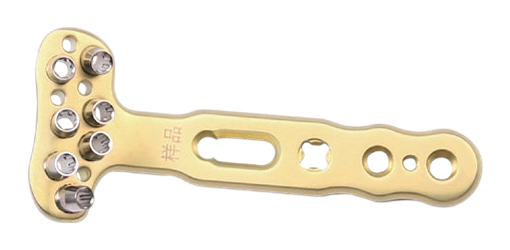
Designed by Kangli Orthopaedics, this pure titanium distal radial locking plate is supplied with a dedicated drill guide for distal radius and forearm fixation procedures. The plate provides the implant structure, while the guide supports drill alignment through the selected opening. Its broadened distal section carries the screw openings around the radius and transitions into a tapered shaft.
Contoured Plate Profile for Distal Radius Procedures
The broad distal section narrows into a softly contoured shaft for placement along the distal radius region. Beveled plate edges create a gradual perimeter transition, while the shaft extends the fixation area away from the widened distal end.
Angled Locking Interfaces for Screw Placement
The distal opening cluster combines circular and angled interfaces for locking screw heads. The varied orientations accommodate directed screw placement within the distal fixation zone, with the screw heads seated in the corresponding plate interfaces.
Dedicated Screw Positions Across the Distal Radius
Specific distal openings are laid out for screws directed at the radial styloid process, along the line of the lunate articular surface, and toward the distal ulnar-radial articular region. Each position sets the trajectory of its own screw, so a single distal cluster reaches those separate areas without repositioning the plate.
Universal Head Interface with Rotational Screw Adjustment
The universal head structure allows each screw to be rotated within its opening rather than following one fixed axis. That cone of adjustment lets adjacent screws be aimed at separate fracture fragments from the same plate position, which is the mechanical case for using the plate over comminuted distal bone.
Lengthened Combination Holes for Plate Adjustment
A lengthened combination hole accepts a screw before the plate's position is final. The slot allows the plate to be shifted along its length against a seated screw, so alignment is adjusted in place instead of by removing the screw and starting the fixation again.
Kirschner Wire Holes for Provisional Holding
Dedicated Kirschner wire holes let the plate be pinned to bone temporarily while position is checked and screws are prepared. The wires hold the plate steady during that stage and are removed once definitive screws are seated, so the plate does not need to be held by hand through drilling.
Drill Guide for Controlled Hole Preparation
The drill guide aligns with the selected plate opening to establish the preparation path before screw insertion. This configuration guides the drill through the intended opening and helps maintain alignment with the plate during preparation.
Side-Specific Left and Right Options
Left- and right-sided configurations follow the corresponding distal radius contour and hole orientation. Selecting the matching version positions the widened distal section and shaft transition for the intended side of the forearm.
Applications in Distal Radius and Forearm Fixation
- Distal radius fracture fixation procedures
- Multi-fragment distal radial fixation using angled screw trajectories
- Forearm locking plate placement
- Drill-guided preparation for distal radial screws
- Left- or right-sided distal radius fixation
This plate is part of the forearm fixation range alongside the Distal Radial Buttress Locking Plate. Its supplied drill guide provides the preparation path through the plate's selected opening.