

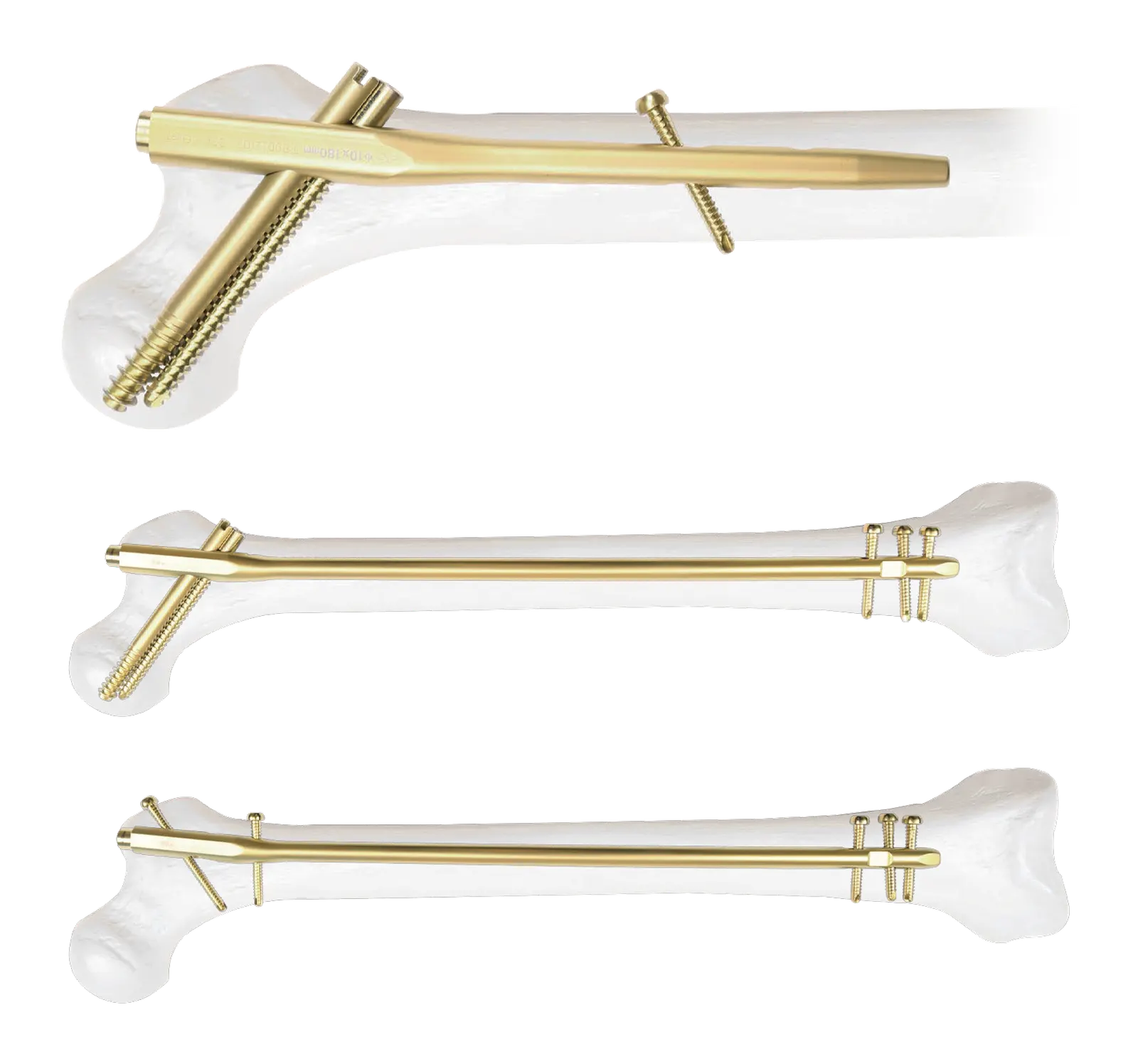
Sliding Compression Gamma Nail System
- Intramedullary Nails
- Femur & Hip
- Compression
- Sliding
Specification
- Material
- Titanium Alloy
- Diameter
- 6 - 12 mm
- Length
- 65 - 420 mm
- Specification
- 0 - 15
- End Cap Length
- 0 - 15 mm
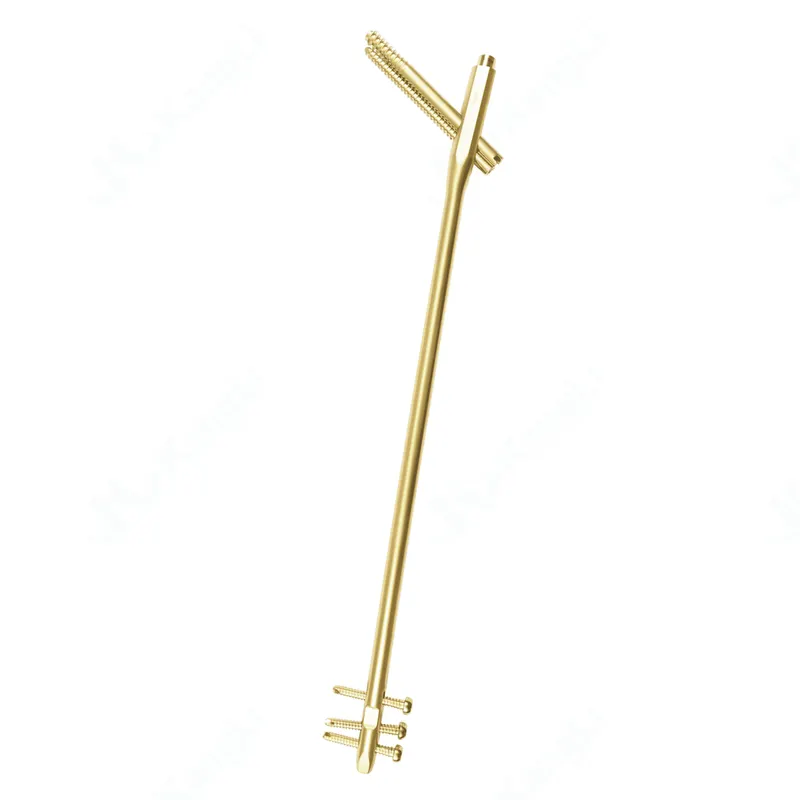
Kangli Orthopaedics manufactures the Sliding Compression Gamma Nail System from titanium alloy for proximal femoral intramedullary fixation. The system combines a parent screw with a sliding lag screw, nail-locking and end-cap components, and small gamma nail options. Its coordinated screw-and-nail configuration is intended for femoral fixation procedures requiring a defined relationship between the proximal screw path and the intramedullary nail. It is supplied in left and right forms.
Proximal geometry drawn for a greater trochanter entry
The nail is drawn with a 5° lateral offset, which aligns the insertion axis with an entry point at the greater trochanter rather than requiring the nail to be angled into position after entry. The proximal body carries a trapezoid cross-section, so the nail presents flat faces to the surrounding bone instead of a plain cylindrical profile. The proximal screw path is set at 127° to the shaft, fixing the angle at which the lag screw crosses toward the femoral head once the nail is seated.
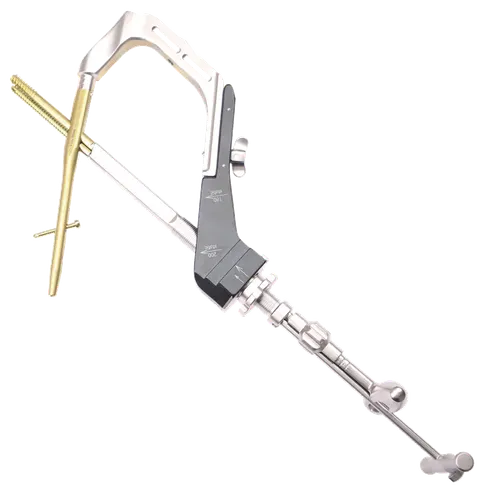
A reduced proximal diameter on the small formats
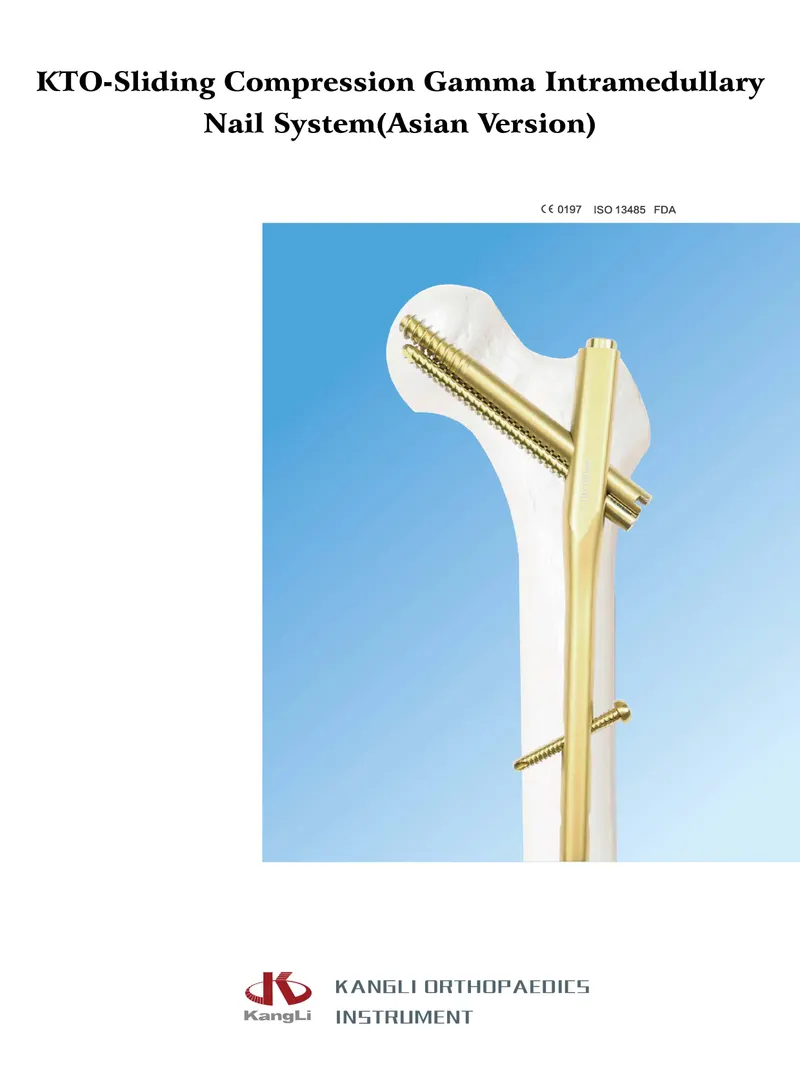
The small formats reduce the proximal diameter relative to the standard body, so the proximal end occupies less of the medullary canal at the widest part of the nail. This is the sizing behind the small gamma nail catalogued as the Asian Version, and it is why the range is listed in both standard and small forms rather than in one universal size.
Sliding compression through a paired screw construct
The system pairs a parent screw with a Sliding Compression Lag Screw. The lag screw travels in relation to the parent screw, incorporating the sliding compression function into the paired screw construct rather than treating it as a separate screw format. The parent screw serves as the primary threaded member, while the lag screw, also referred to as the sub screw, completes the paired fixation path in the proximal femoral region. The matched components establish the intended relationship between the nail, parent screw, and sub screw during assembly.
Double-thread lag screw insertion
The lag screw is cut with a double thread, so each turn of the driver advances it further along its axis than a single-lead thread would. The same insertion depth is therefore reached in fewer turns, and the screw runs in faster for a given rate of driving.
Holding-type screws that stay on the driver
Both the intraoperative anti-off screw and the full-thread locking screw are holding types: the screw is retained on the driver rather than sitting loose on its tip, so it does not fall off the driver. The locking screw is threaded along its full length rather than at the tip alone.
Distal locking options and incision count
Distal locking is not restricted to a single fixed hole: a distal locking slot is among the options, so the distal construct can be selected from what the nail offers rather than being determined by one geometry. Locking is arranged so that two locking screws are completed through one surgical incision on the 180 mm nail. The holding-type full-thread locking screws cross the nail in more than one plane.
Nail formats, end caps and sizes
The range includes a small gamma nail identified as the Asian Version and an Enhanced Edition variant, each catalogued with compatible lag-screw components and its corresponding end cap. The Sliding Compression Nail Locking End Cap closes the nail and interfaces with its terminal locking feature, while a normal end-cap option provides an alternative terminal configuration, allowing the nail to be completed with or without terminal locking. End caps are catalogued in four lengths, from a flush option upward. Nail bodies are supplied in titanium alloy across four diameters and three lengths, with lag-screw and locking-screw components listed against their own matched diameters.
Catalogue applications
- Proximal femoral intramedullary nailing
- Sliding compression gamma nail fixation
- Paired parent screw and lag screw assembly
- Terminal closure of a gamma nail
For retrograde femoral nailing, the related catalogue option is the Multiplanar Retrograde Femoral Intramedullary Nail System.
Insights & resources
- 17:41
 Video
VideoKTO Gamma Nail Video
- 94 PAGES
 Brochure · Implant
Kangli Implants Catalog
- 5 PAGES
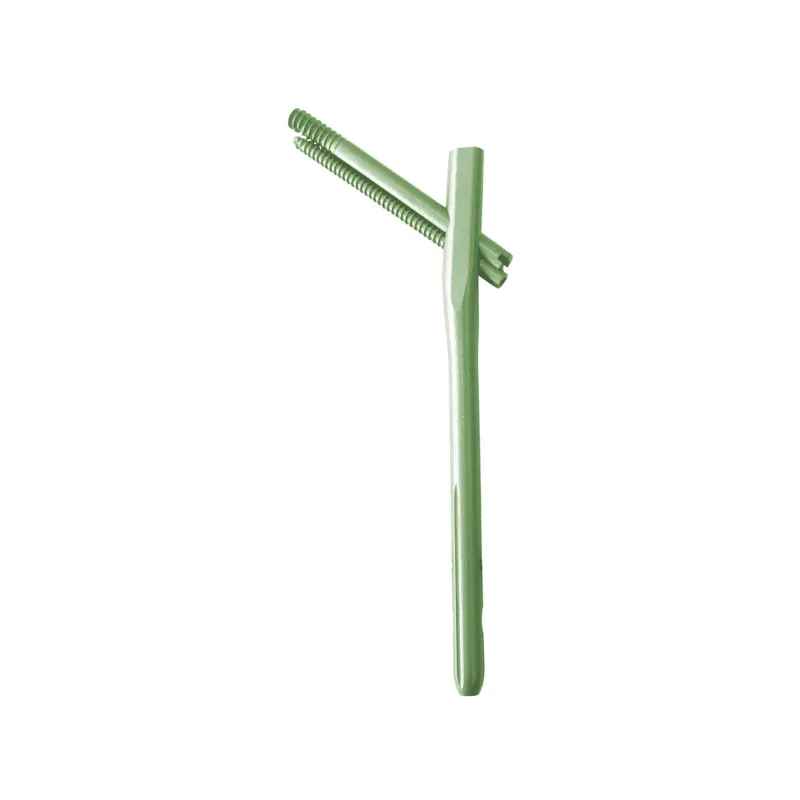 Brochure · Instrument
KTO Gamma Nail Instrument Set
- 8:47
 Video
VideoKTO Gamma Nail Asian Ver Video
- 2 PAGES
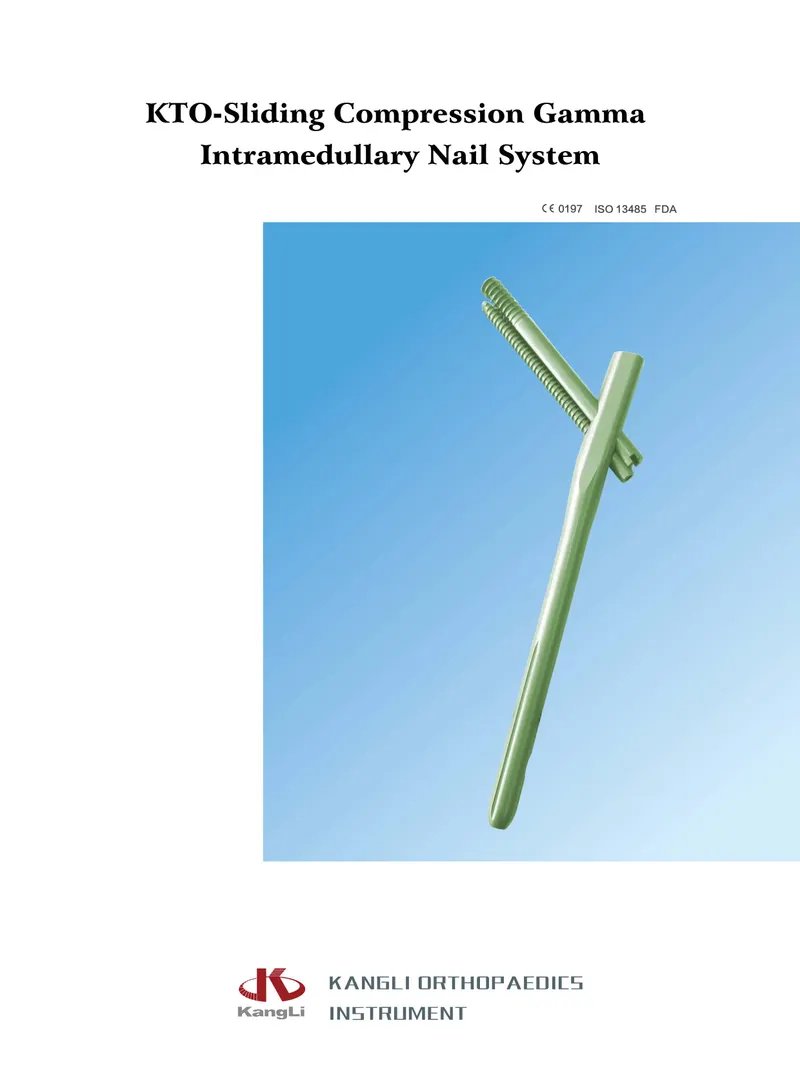 Brochure · Implant
KTO Sliding Compression Gamma Nail
- 6 PAGES
 Brochure · Instrument
KTO Gamma Nail Small Extended Instrument Set
- 4 PAGES
 Brochure · Implant
KTO Sliding Compression Gamma Nail Asian
- 5 PAGES
 Brochure · Instrument
KTO Gamma Nail Small Instrument Set