
Thoracolumbar Interbody Fusion Cage (PEEK / Titanium)
Specification
- Material
- PEEK, Titanium Alloy
- Specification
- 8×20 - 14×36
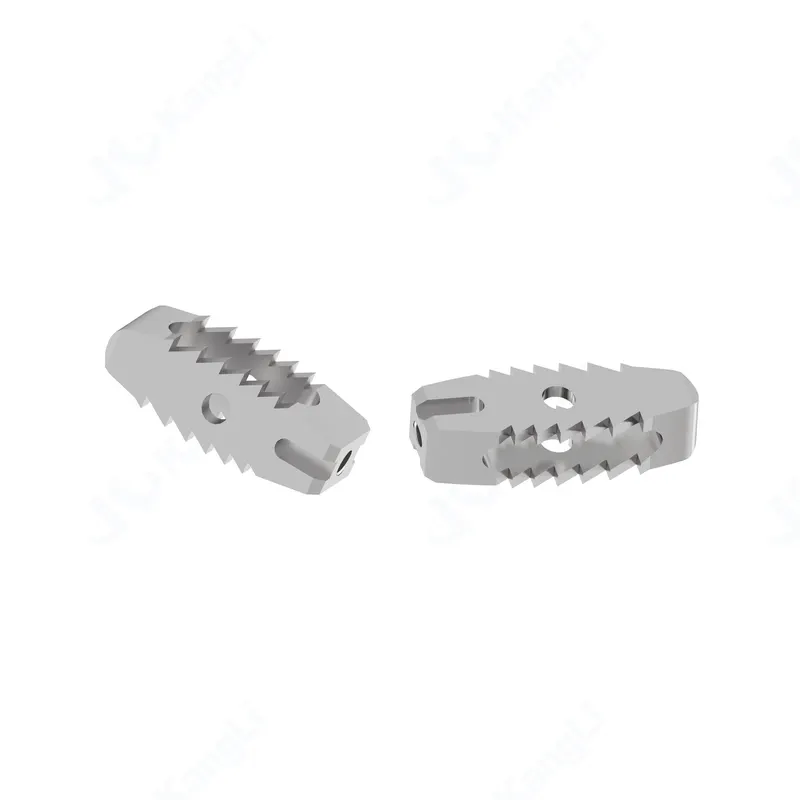
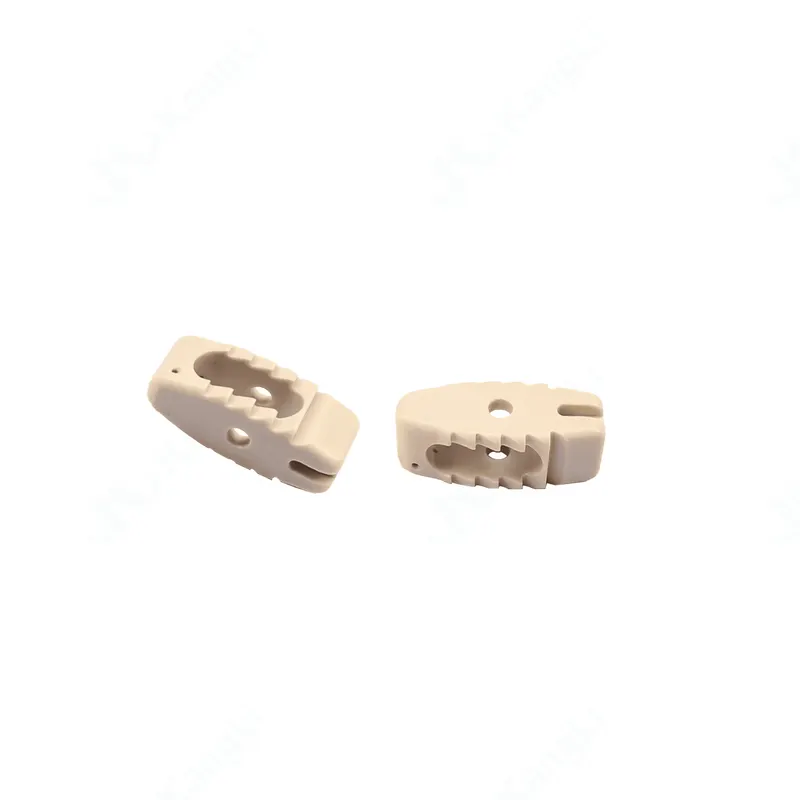
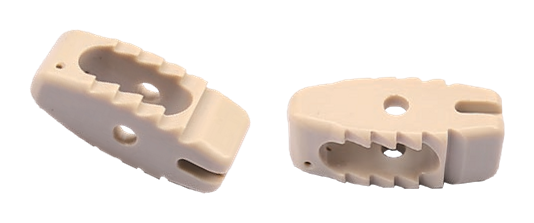
Kangli Orthopaedics offers the Thoracolumbar Interbody Fusion Cage in PEEK and titanium alloy configurations for thoracic and lumbar interbody implant portfolios. The cage features a longitudinal opening, repeated raised teeth, rounded outer corners, and chamfered transitions for specification by anatomy, material, and implant geometry.
Longitudinal-Opening Cage Geometry
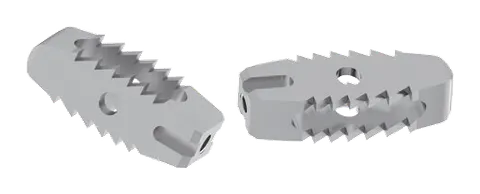
A broad central opening extends through the cage along its primary axis. Stepped edges frame the cavity, while the internal surfaces create a visibly open body profile rather than a solid end-to-end structure.
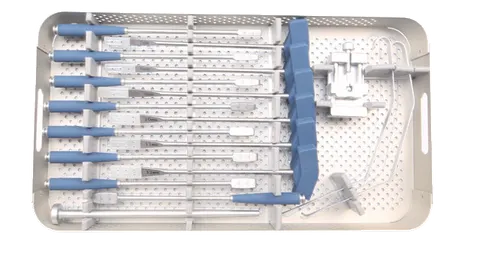
Repeated Teeth Along the Contact Edges
Rectangular teeth follow the longitudinal edge beside the central opening, with matching stepped projections along the opposite upper edge. This arrangement creates a series of defined engagement points along the cage’s external profile.
Rounded Corners and Chamfered Transitions
Rounded outer corners, a curved end cap, and chamfered transitions connect the cage’s principal faces. Together, these features give the implant a continuously contoured exterior for thoracolumbar interbody implant selection.
PEEK and Titanium Alloy Configurations
The cage is available in PEEK and titanium alloy formats, allowing distributors and physicians to specify the material configuration within their product requirements. The Titanium Thoracolumbar Interbody Fusion Cage refers to the titanium alloy version of this implant category.
Thoracic and Lumbar Implant Selection
This cage category can be listed for:
- Thoracolumbar interbody fusion implant portfolios
- Lumbar interbody cage specifications
- Thoracic interbody cage specifications
- Longitudinal-opening cage configurations
- PEEK or titanium alloy material selection
For cervical-level requirements, Kangli Orthopaedics also provides the Cervical Interbody Fusion Cage (PEEK / Titanium), allowing product selection to correspond with the relevant spinal region.