

Cervical Spine Plates
Overview
Range overview
Cervical spine plates from Kangli Orthopaedics cover the anterior and the posterior approach in one sub-catalog, with the laminoplasty hardware and rod construct alongside them. Almost everything here is pure titanium or titanium alloy; one PEEK interbody device is kept with the plates so an anterior construct can be specified in a single pass. Sizes are given per product.
Anterior cervical plates and windowed plate bodies
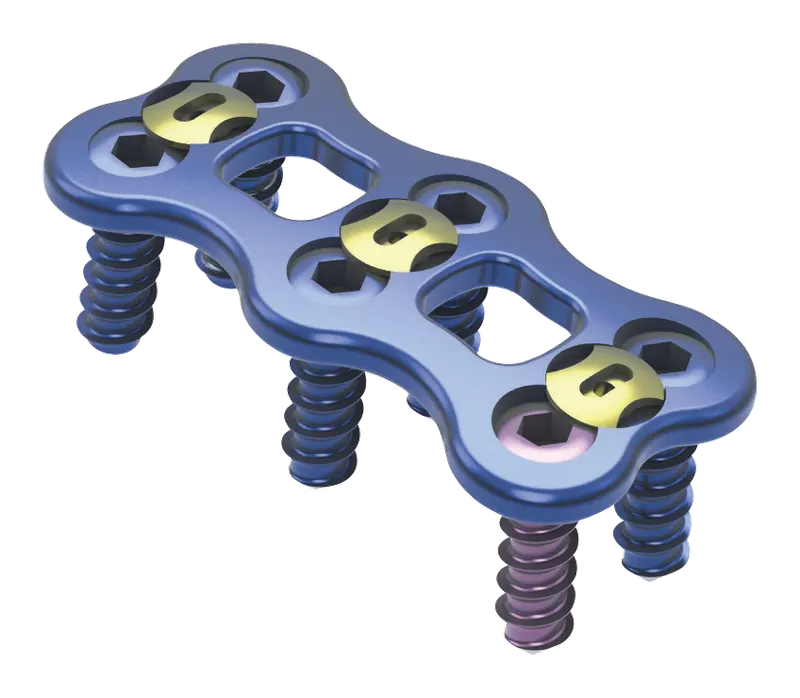
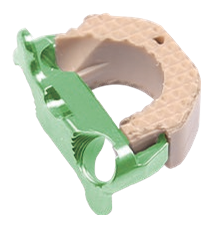
The anterior plate is pure titanium, with a waisted, gently curved body, large rounded windows through the central section and hexagonal recesses at the fixation points. It comes in four-, six- and eight-hole patterns over a graded series of lengths from 22 mm. A curved PEEK cage in six specifications is listed here too, its zero-notch anterior profile held within the implant outline rather than projecting as a separate plate.
Cervical laminoplasty plates in T-shaped and bent forms
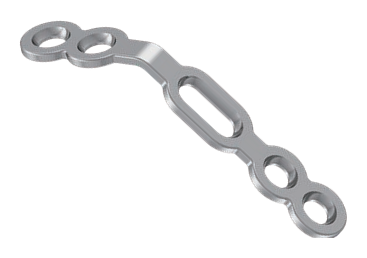
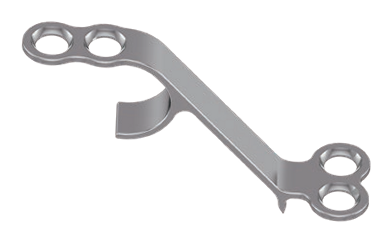
Two laminoplasty formats are listed, both pure titanium. The T-shaped anti-backout plate has a shallow curved bridge, beveled fixation openings at each rounded end and two underside projections that set its contact points, in two heights and five spans of 8, 10, 12, 14 and 16 mm. The single-bend and double-bend plate uses a five-hole layout, pairing circular end openings with an elongated central slot for adjustment before fixation, in four spans from 8 to 14 mm.
Posterior rods, occipital plates and laminar hooks
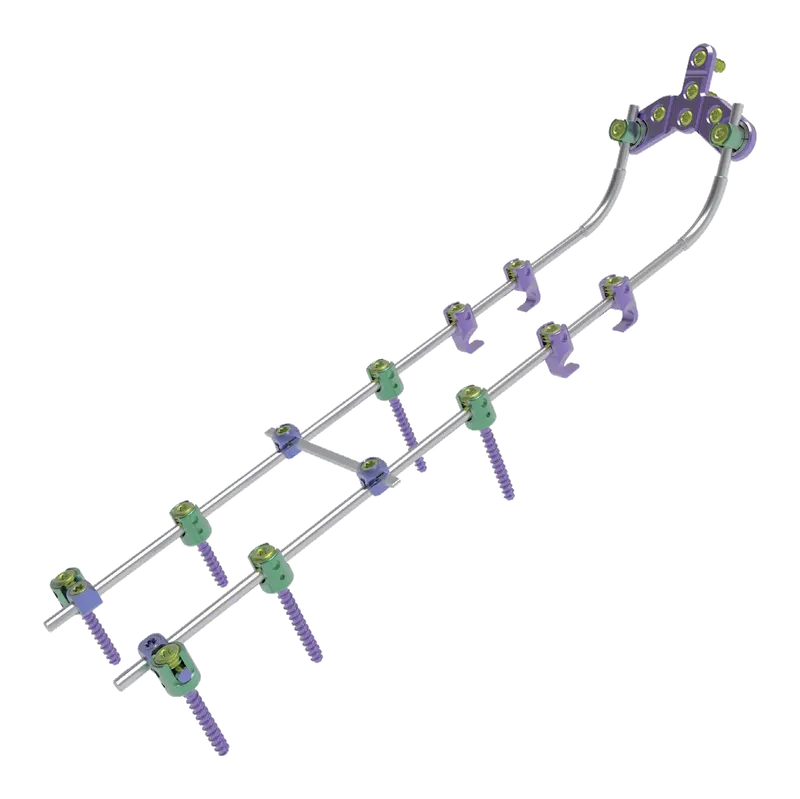
Paired curved rods form the framework of the titanium alloy posterior system, clamp bodies link each screw head to a rod, and a cervical crosslink joins the two transversely; screw shafts are listed in 3.5 and 4.0 mm diameters over a series of lengths. Occipital plates in two forms, an occipital bone rod, occipital screws, laminar hooks and domino and lateral fixation blocks extend the same layout toward the occiput and the lamina. Component lists for these cervical plating systems follow a quote request.
FAQ
Frequently asked questions
What does the cervical spine plates range include?
Five listings: an anterior plate in pure titanium, a T-shaped anti-backout laminoplasty plate, a single-bend and double-bend laminoplasty plate, a titanium alloy posterior rod-and-screw system with its connectors, and a curved PEEK interbody cage carrying a zero-notch anterior profile. Between them they cover anterior plating, laminoplasty fixation and posterior construct assembly extending toward the occiput.
How many holes and what lengths does the anterior plate come in?
It is listed in four-, six- and eight-hole patterns, across a graded series of lengths starting at 22 mm, in pure titanium. The body is waisted with rounded ends and a gradual curve, large rounded windows open through the central section, and each fixation point carries a recessed hexagonal drive so the driver interface stays within the plate contour.
What spans do the laminoplasty plates cover?
The T-shaped anti-backout plate is listed in five spans, 8, 10, 12, 14 and 16 mm, and two heights, with underside projections that set its contact points against the edge of the site. The single-bend and double-bend plate covers four spans from 8 to 14 mm on a five-hole layout, its central slot giving an adjustment path before fixation is completed.
Can the posterior system be extended to the occiput?
Yes. An occipital bone rod takes over as the upper rod member, and occipital plates in two forms plus occipital screws provide the anchoring points at that end. A cervical crosslink joins the paired rods transversely, laminar hooks give a hook-shaped connection at the lamina, and domino and lateral fixation blocks link parts of the construct together.
Is an interbody device listed with these plates?
One is. A curved PEEK cage sits in this sub-catalog so an anterior construct can be specified in a single pass. Its zero-notch anterior profile stays within the cage outline instead of projecting forward, a large central aperture runs through the body, and a repeating diamond-like texture covers the upper and outer faces. Six specifications are listed.