

Universal Locking Plate Systems

Overview
Range overview
Universal locking plate systems are the part of a trauma catalogue that is not tied to one bone, and Kangli Orthopaedics groups four products here. They are a straight plate in three configurations, an arched attachment plate, a Kirschner wire in ten diameters, and a titanium cable assembly with its buckle, filling cap and connecting screw. The plates are pure titanium, the wire and cable titanium alloy.
Straight reconstruction plates and tubular formats
The straight plate runs on a single axis, with a row of elongated apertures and a smaller circular hole at each rounded end. It is catalogued as a reconstruction plate, an upper limb restricted compression plate, and one-third tubular plates where a narrower section suits the segment. Thirty-five variants cover eight hole counts: 5, 6, 7, 8, 9, 10, 12 and 14.
Orthopaedic cerclage cable systems and skeletal pins
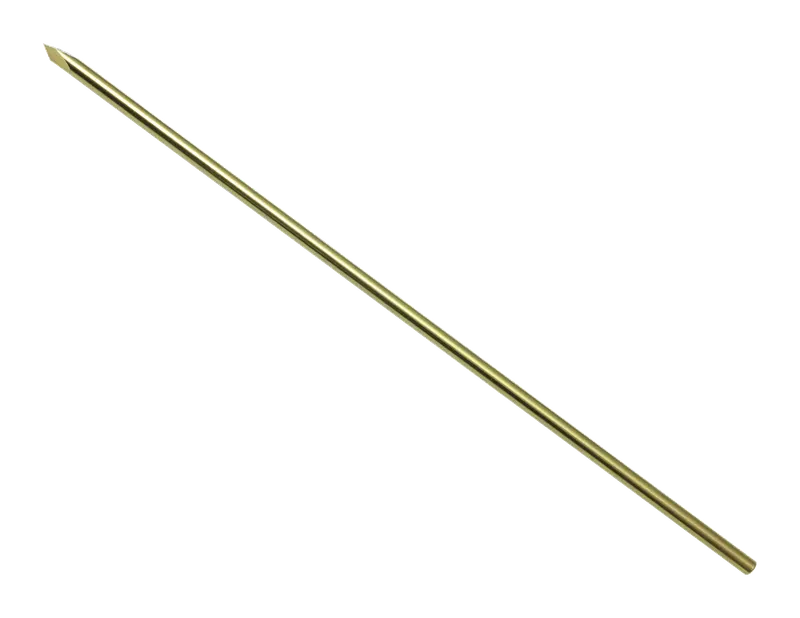
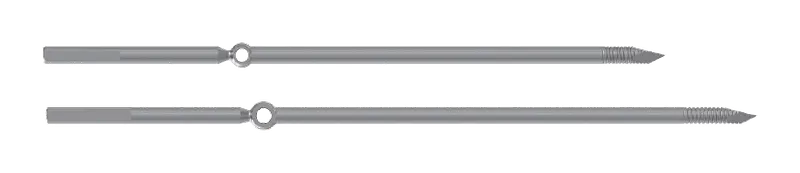
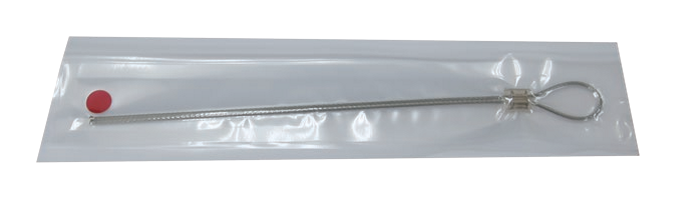
Titanium cable fixation systems are built from many fine alloy wires twisted together rather than one solid wire, so the body bends as it is routed and holds the curve. A fasten buckle captures the loop and locks it where it is set, and a tightener applies the tension before the buckle closes, so no wire ends are twisted together. Cables come in four diameters — 1.3, 1.4, 1.8 and 1.9 mm — at a single 520 mm length. Kirschner wires are supplied as metal skeletal pins in ten diameters from 0.8 to 4.0 mm, at 150 mm and 250 mm.
The attachment plate and its locking screws
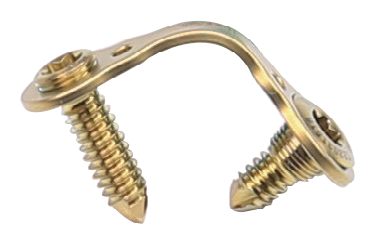
The attachment plate is a shallow arch between two wider ends, each carrying a collar that seats a screw head. Its screws pair a conical point with continuous coarse threads, and a recessed drive keeps the driver in line with the collar. Twelve variants span six specifications. To receive the size tables, request a quote.
FAQ
Frequently asked questions
What is included in the titanium cable fixation system?
Four component types: a metal titanium cable stranded from many fine alloy wires, a fasten buckle that captures and locks the loop, a cable filling cap, and a locking connecting screw for attachment at a compatible fixation interface. Connecting screws are offered in two specifications. Cables run in four diameters — 1.3, 1.4, 1.8 and 1.9 mm — at a single 520 mm length.
Which configurations of the straight plate are available?
Three. The reconstruction plate covers a general straight fixation line, the upper limb restricted compression plate is configured for upper-limb work, and the one-third tubular plate suits a narrower segment. All share the same linear body: a single row of elongated apertures with a smaller circular hole near each rounded end. Thirty-five variants cover eight hole counts — 5, 6, 7, 8, 9, 10, 12 and 14.
What diameters and lengths are the Kirschner wires supplied in?
Ten diameters, from 0.8 mm through 1.0, 1.2, 1.5, 1.8, 2.0, 2.5, 3.0 and 3.5 to 4.0 mm, at two lengths, 150 mm and 250 mm. Each is a single-piece titanium alloy pin with a tapered point at one end and a blunt cut at the other, so orientation is readable in the hand. They are supplied in sterile packaging.
How is the cable locked without twisting the wire ends?
The fasten buckle captures the cable and holds the loop at the position chosen, so the lock comes from the buckle mechanism rather than from winding two ends together. Tension is applied separately with a tightener before the buckle closes, which keeps setting the load and locking it as two distinct steps instead of one combined pull and twist.
What is the arched attachment plate for?
It links a construct along a path that is not flat or linear. A shallow central bridge spans two wider ends, each with a collar that seats a screw head, and the screws pair a conical point with continuous coarse threads driven through that collar. Twelve variants span six specifications. The plate is pure titanium and is catalogued for use alongside Kirschner wire and cable fixation.