

Proximal Tibia Locking Plates

Overview
Range overview
Kangli Orthopaedics manufactures proximal tibial locking plates in pure titanium, collected here as eight plate families that reach from the tibial plateau to the shaft below. Sided versions place the contoured head on the corresponding side of the tibia, while longer bodies extend the same head design farther down the bone. Lengths and hole counts are catalogued family by family rather than as one continuous span.
Tibial platform plates, medial and lateral
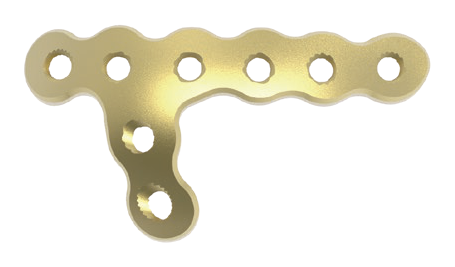
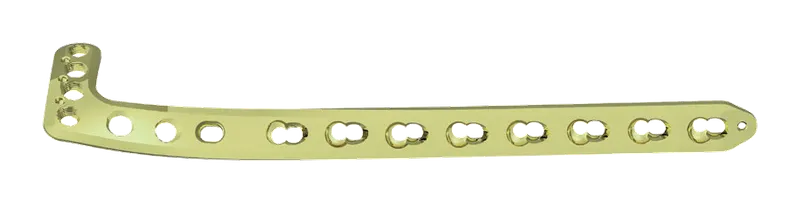
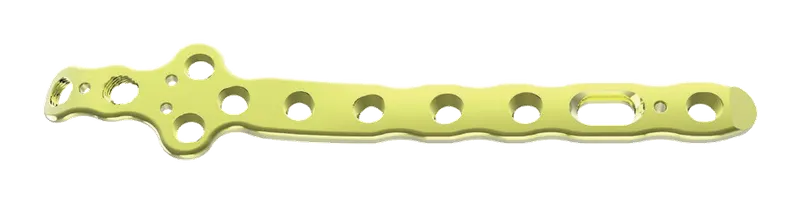
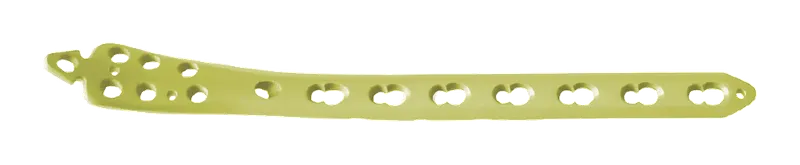
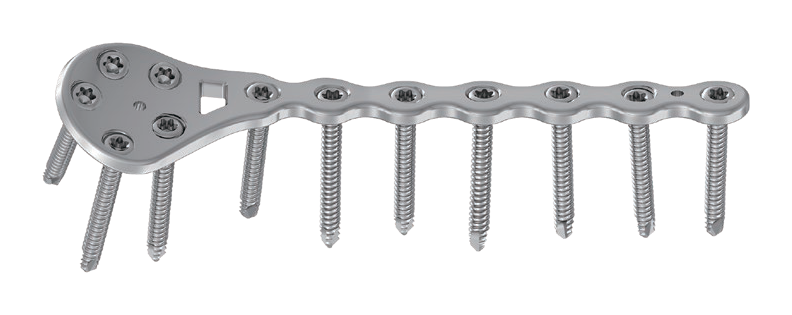
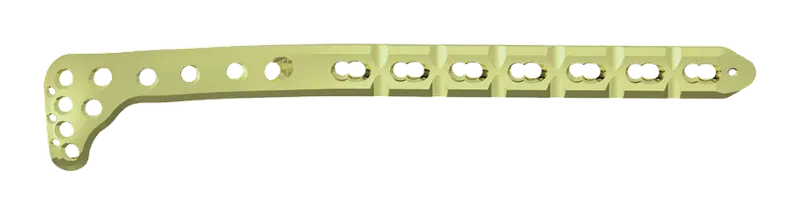
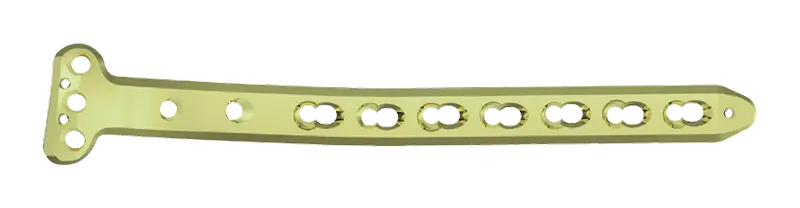
The Proximal Tibial Lateral Locking Plate is the largest family here at 36 variants, with clustered apertures around the upper contour and waisted openings down the shaft. Its medial counterpart runs to 22 variants in odd hole counts from five to fifteen, each left and right. Where a shorter footprint suits the plan, the Anteromedial Tibial Plateau Locking Plate forms an asymmetric T over bodies of 39 mm and 48 mm.
HTO osteotomy plates for the medial proximal tibia
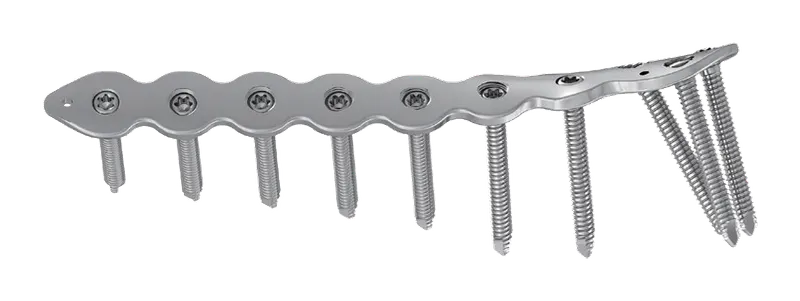
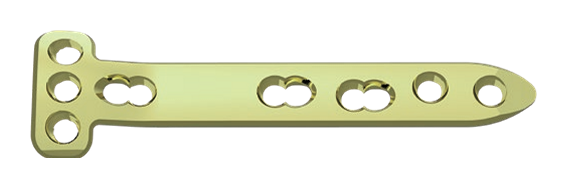
Open- and closed-wedge osteotomy of the medial proximal tibia is the brief for the Tibial Osteotomy Locking Plate, whose paired-lobed shaft slots allow plate translation before the screws are tightened. Two four-hole variants are catalogued, at 112 mm and 115 mm.
Tibial metaphyseal plates and shaft coverage
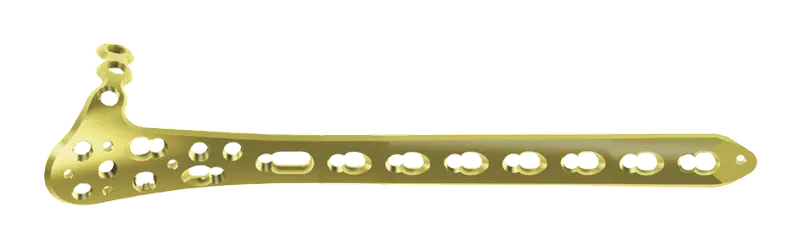
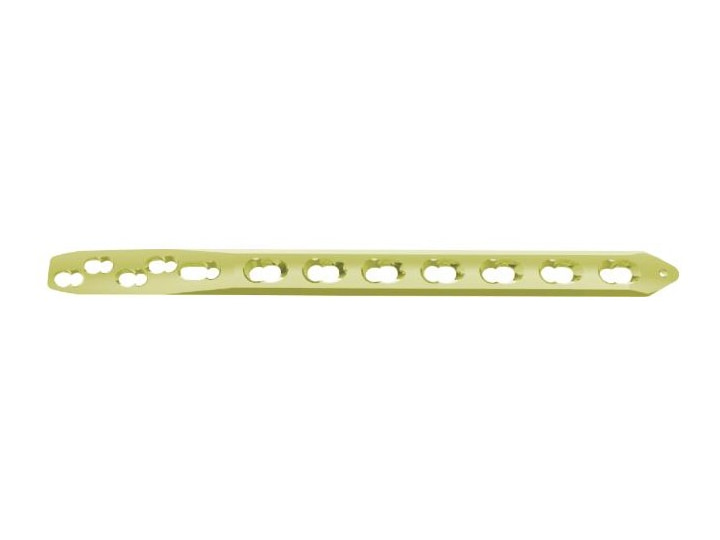
Grouped proximal openings, an elongated slot and larger oval holes carry the Tibial Metaphyseal Locking Plate toward the shaft over four lengths of 158, 194, 230 and 266 mm. Farther down, the Tibial Shaft Locking Plate keeps a continuous central bridge with opening fields near each end, across twelve variants.
Posterior column tibial plates and the medial column
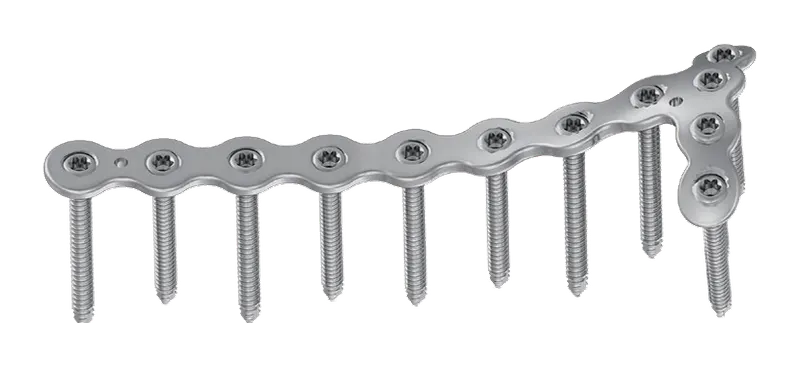
The posterior plate sets an asymmetrical head over a single-row shaft in three, five and seven holes at 65, 91 and 117 mm; the Medial Column Tibial Plateau Locking Plate uses four, six and eight holes at 61, 87 and 113 mm. OEM and ODM work is accepted throughout; for this section of the catalogue, request a quote.
FAQ
Frequently asked questions
Which parts of the tibia does this range cover?
Eight plate families are listed. Lateral and medial plates sit at the proximal tibia, a compact anteromedial plate covers a local footprint at the plateau, and dedicated posterior-column and medial-column plates address each column. An osteotomy plate serves the medial proximal tibia, while metaphyseal and shaft plates carry fixation from the plateau region down the bone.
Do the proximal tibial plates come in left and right forms?
Several families do. The Proximal Tibial Lateral Locking Plate runs to 36 variants and the medial version to 22, both in sided pairs. The Anteromedial Tibial Plateau Locking Plate is catalogued in four sided variants. The osteotomy, metaphyseal, shaft, posterior-column and medial-column plates are listed by hole count and length rather than by side.
Is there a plate for high tibial osteotomy?
The Tibial Osteotomy Locking Plate is shaped for open-wedge and closed-wedge osteotomy of the medial proximal tibia. Paired-lobed slots along the shaft allow the plate to translate before the screws are tightened, and circular openings at the broad proximal end and along the taper take the locking screws. Two four-hole variants are catalogued, at 112 mm and 115 mm.
What lengths does the tibial shaft plate cover?
Twelve variants are listed for the Tibial Shaft Locking Plate, across lengths of 127, 143, 159, 177, 191, 195, 213, 223, 249, 255 and 285 mm, in 6, 7, 8, 9, 10, 12 and 14 holes. The body keeps a continuous central bridge, with the opening fields grouped toward each tapered end.
What material are the tibial plates made from?
All eight families on this page are machined from pure titanium. Kangli cuts them on its own CNC equipment, including five-axis machining centres and Swiss-type lathes, and runs an on-site vacuum heat-treatment furnace for stress relief and annealing. The company has manufactured orthopaedic implants and instruments since 2002.
How do I request the tibial section of the catalogue?
Use the Request a Quote form and name Tibia, or list the specific plates you need documentation for. Naming the hole counts, lengths and sides under consideration shortens the exchange, since the two proximal families alone account for 58 catalogued variants. OEM and ODM enquiries can be raised through the same form.